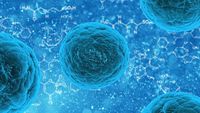
A collective of 38 researchers from nine different nations have raised a warning flag regarding the potential development of "mirror bacteria"—artificial organisms with an inverted molecular structure compared to those found in nature, which could pose a significant risk to human, animal, and plant health by exposing them to harmful pathogens.
Although the scientific and technological capabilities required to synthesize mirror bacteria in a lab are estimated to be more than a decade away, these experts argue that the risks associated with this emerging field of research are "unprecedented" and have been "overlooked." In a report published on December 12th in the journal Science, the researchers stated, "Driven by curiosity and plausible applications, some researchers have initiated efforts to engineer life forms entirely composed of mirror-image biological molecules. The creation of such mirror organisms represents a radical departure from known life forms, and their development necessitates careful contemplation."
A defining characteristic of all known life forms is their uniform chirality, or handedness. For instance, DNA and RNA are constructed from "right-handed" nucleotides, while proteins are made from "left-handed" amino acids. Just as a right-handed glove would not fit a left hand, the interactions between molecules often hinge on their chirality.
Initially skeptical about the potential risks of mirror bacteria, the experts, who include specialists in immunology, plant pathology, ecology, evolutionary biology, biosecurity, and planetary sciences, have now expressed "deep concern." Report co-author Jonathan Jones, a group leader at The Sainsbury Laboratory in Norwich, UK, remarked, "It's a genie you don't want to release from the bottle. The likelihood of a negative outcome is low, but the consequences of such an event would be dire."
Unless there is compelling evidence that mirror life poses no extraordinary dangers, the scientists recommend that research aimed at creating mirror bacteria should not be allowed, and funding bodies should make it clear that they will not endorse such endeavors. The authors' findings in Science were based on a 300-page technical report by Adamala et al., which detailed the feasibility and risks associated with mirror bacteria. The report indicated that the creation of mirror life is a long-term goal for several laboratories and major research funders, as part of broader efforts to better understand life and potentially contribute to the development of drugs and other therapeutics. Many synthetic biologists aim to understand how cells can be synthesized from their constituent molecules, shedding light on the origins of life and exploring the possibilities of other life forms.
The report posits that if a cell with natural chirality can be synthesized from lifeless molecules, then, theoretically, a mirror-image cell could be created from mirror-image molecules using the same methods. The report emphasizes that there is no imminent threat, and there are significant technical challenges to creating mirror bacteria. Achieving this within a decade would require a substantial, coordinated effort, similar in scale and budget to the Human Genome Project, which mapped 92% of the human genome over 12 and a half years.
Immune systems rely on recognizing specific molecular shapes found in invading bacteria. If these shapes were mirrored—as they would be in mirror bacteria—recognition would be impaired, and immune defenses could fail, potentially leaving organisms vulnerable to infection. The scientists argued in the Science report, "We cannot rule out a scenario in which a mirror bacterium acts as an invasive species across many ecosystems, causing pervasive lethal infections in a substantial fraction of plant and animal species, including humans." Even a mirror bacterium with a narrower host range and the ability to invade only a limited set of ecosystems could still cause unprecedented and irreversible harm. Transmission via animals and humans could enable the spread of such bacteria into different ecosystems.
Jones, an expert in plant immune systems, stated that mirror bacteria would be extremely difficult to detect in plants. "Even if it didn’t grow very well initially, mutations would kick in and there’d be selection for something that grew better. That’s how evolution works," Jones explained. Tom Ellis, a professor of synthetic genome engineering at Imperial College’s Centre for Synthetic Biology and department of bioengineering, said that mirror life is still very much in the realm of science fiction rather than science fact.
"Broadly, I agree with the concerns, although they are very speculative considering research is currently at a very early stage and far from being any threat," said Ellis, who was not involved in the research. Scientists have been attempting to create synthetic life using non-mirror molecules for over a decade, Ellis said, but they are still a "long way" from having self-sustaining cells that can divide, replicate, and evolve. "This ‘synthetic cell’ work is challenging enough already when (scientists) use normal molecules, enzymes, and chemicals.
When they have to do all that but only with mirror molecules, that all need to be made and invented, then it makes it … 1000 times harder," he said via email. "The scale of difficulty is akin to humans preparing to land on Mars, and people starting to talk about flying to other stars and galaxies. There’s such a leap in the difference of the achievement needed, and the basic initial goal isn’t even accomplished yet."

By Laura Wilson/Dec 21, 2024
By Victoria Gonzalez/Dec 21, 2024
By James Moore/Dec 21, 2024

By Laura Wilson/Dec 21, 2024
By Lily Simpson/Dec 21, 2024
By Noah Bell/Dec 21, 2024

By Thomas Roberts/Dec 21, 2024
By Samuel Cooper/Dec 21, 2024
U6FGL)1L%5DUR%7B%7D~%24GQ7.png)
By Noah Bell/Dec 21, 2024
By Elizabeth Taylor/Dec 21, 2024

By Ryan Martin/Oct 15, 2024

By Eric Ward/Oct 15, 2024

By Joshua Howard/Oct 15, 2024

By Victoria Gonzalez/Oct 15, 2024

By Sophia Lewis/Oct 15, 2024

By Lily Simpson/Oct 15, 2024

By Ryan Martin/Oct 15, 2024

By Ryan Martin/Oct 15, 2024

By Jessica Lee/Oct 15, 2024