Astronauts Aboard Starliner Experience Further Delay in Space Flight

Dec 21, 2024 By Noah Bell

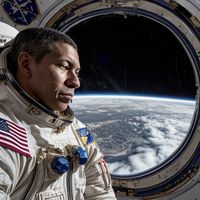
NASA has declared a postponement of the SpaceX Crew-10 mission, which will result in astronauts Butch Wilmore and Suni Williams remaining in space for an extended period. This unexpected extension adds to their already prolonged stay aboard the International Space Station (ISS). Initially, Wilmore and Williams embarked on their journey in June, commanding the maiden crewed test flight of Boeing's Starliner capsule.


Their mission, anticipated to be a week-long endeavor, was unexpectedly extended into months due to technical malfunctions with their spacecraft, prompting NASA to deem it unsafe to return them to Earth using the Starliner. Consequently, the astronauts have integrated with Crew-9, a regular ISS mission that was initially scheduled to conclude no earlier than February, following a transition period with Crew-10.


Now, due to the need for "additional time to finalize preparations on a new Dragon spacecraft for the mission," as stated by NASA, Crew-10's launch is set to be delayed by at least a month. In a blog post on Tuesday, NASA detailed that they and SpaceX had evaluated various strategies for managing the subsequent crew transition, including the possibility of utilizing an alternative Dragon spacecraft. After thorough deliberation, it was decided that launching Crew-10 in late March, once the new Dragon spacecraft is ready, would best align with NASA's objectives and the ISS's goals for 2025.


The Crew-9 mission, which also involves NASA astronaut Nick Hague and Russian cosmonaut Aleksandr Gorbunov, arrived at the space station in September. With the current delay, Wilmore and Williams, who have already spent over six months on the station, are expected to have completed approximately nine months in space by the time they return in late March or early April. While standard ISS missions typically last six months, it is not unusual for astronauts to experience an unplanned extension to their stay, ranging from days to months. For instance, NASA astronaut Frank Rubio holds the record for the longest continuous stay on the ISS, having spent 371 days there on a mission that concluded in 2023.


The decision to delay the Crew-10 launch is a strategic move that reflects the importance of safety and mission success. NASA and SpaceX are committed to ensuring that all spacecraft are fully prepared and meet the highest standards before launching. This delay allows for thorough inspections and any necessary adjustments to the new Dragon spacecraft, which is crucial for the safety of the astronauts and the success of the mission.


Astronauts Wilmore and Williams have demonstrated exceptional adaptability and resilience during their extended stay on the ISS. Their experience has been a testament to the human spirit and the ability to overcome challenges in the pursuit of scientific discovery. Their extended mission has provided valuable insights into long-duration space travel, which is essential for future deep space exploration missions.


The International Space Station is a collaborative effort involving multiple space agencies from around the world, including NASA, Roscosmos, JAXA, ESA, and CSA. It serves as a microgravity laboratory, where researchers conduct experiments in various fields, including biology, physics, astronomy, and Earth science. The ISS is also a platform for testing new technologies and procedures that will be crucial for future space missions, such as those to the Moon and Mars.


The Crew-10 mission, once launched, will continue this legacy of international cooperation and scientific advancement. The astronauts on board will conduct a series of experiments and perform maintenance tasks on the ISS, contributing to the ongoing research and development efforts in space. They will also serve as a vital link between Earth and the ISS, providing real-time updates and data that help scientists and engineers on the ground better understand the challenges and opportunities of living and working in space.


The delay of Crew-10 also highlights the complexities and uncertainties inherent in space exploration. Despite meticulous planning and preparation, unforeseen issues can arise that require adjustments to mission timelines. The ability to adapt and respond to these challenges is a critical skill for both the astronauts and the teams on the ground supporting them.


As Wilmore and Williams continue their mission on the ISS, they will undoubtedly continue to contribute to our understanding of how humans can live and work in space for extended periods. Their experiences will inform the development of countermeasures to the physical and psychological effects of long-duration spaceflight, which is vital for the safety and well-being of future astronauts.


The Crew-10 mission, when it eventually launches, will mark another significant step in the ongoing partnership between NASA and SpaceX. This collaboration has already resulted in successful crewed flights to the ISS, demonstrating the capabilities of commercial spacecraft in supporting human spaceflight. The Crew-10 mission will further validate these capabilities and pave the way for more ambitious space exploration endeavors.


In conclusion, the delay of the SpaceX Crew-10 launch, while inconvenient, is a necessary precaution to ensure the safety and success of the mission. It underscores the importance of thorough preparation and the ability to adapt to changing circumstances in space exploration. The extended stay of astronauts Wilmore and Williams on the ISS has provided invaluable data and experience that will inform future missions and contribute to the advancement of space travel and exploration.



Recommend Posts
Science

California Squirrels Display Carnivorous Behavior for the First Time, Scientists Report

By Laura Wilson/Dec 21, 2024

While squirrels are commonly recognized for their nut-gathering habits, recent scientific findings have revealed that these creatures can also exhibit carnivorous tendencies. A groundbreaking study has documented a species of squirrel engaging in the hunting, killing, and consumption of voles, a behavior previously unrecorded in these animals. The research, published in the Journal of Ethology, is a part of the Long-Term Behavioral Ecology of California Ground Squirrels Project at Briones Regional Park in Contra Costa County. This project delves into how California ground squirrels, which are native to the grasslands of the state, modify their behavior in response to environmental shifts, particularly an increase in the local vole population. In certain areas of Northern California, vole infestations have been observed, and the research site has noted a significantly higher number of voles than usual over the past decade. Typically, California ground squirrels have been classified as herbivores or granivores, consuming mostly plants and seeds. However, these new findings provide the first evidence of the species actively preying on other live vertebrates, highlighting its adaptability to changes in the ecosystem.
Science

Mirror Bacteria Could Represent a 'Radical Departure from Known Life,' Scientists Caution"

By Victoria Gonzalez/Dec 21, 2024

A collective of 38 researchers from nine different nations have raised a warning flag regarding the potential development of "mirror bacteria"—artificial organisms with an inverted molecular structure compared to those found in nature, which could pose a significant risk to human, animal, and plant health by exposing them to harmful pathogens. Although the scientific and technological capabilities required to synthesize mirror bacteria in a lab are estimated to be more than a decade away, these experts argue that the risks associated with this emerging field of research are "unprecedented" and have been "overlooked." In a report published on December 12th in the journal Science, the researchers stated, "Driven by curiosity and plausible applications, some researchers have initiated efforts to engineer life forms entirely composed of mirror-image biological molecules. The creation of such mirror organisms represents a radical departure from known life forms, and their development necessitates careful contemplation."
Science

Greenland Sharks Have Huge Genomes, Scientists Believe They Might Be the Key to 400-Year Lifespans

By James Moore/Dec 21, 2024

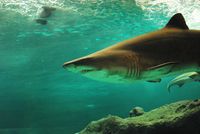
The Greenland shark, a creature of the deep, has long been a subject of intrigue due to its elusive nature and remarkable longevity. These slow-moving predators inhabit the frigid depths of the North Atlantic and Arctic Oceans, uniquely adapted to withstand the extreme cold throughout the year. It is believed that some individuals of this species have been navigating these waters since the colonial era, and scientists are now beginning to uncover the secrets behind their astonishing lifespan. With a metabolism so slow that it was long suspected to be linked to an extended life, the Greenland shark's exact age was a mystery until recent research in 2016 revealed it to be the longest-living vertebrate, with an estimated lifespan of around 400 years, ranging from 272 to over 500 years. Now, a new study aims to unravel the biological mechanisms behind this extraordinary longevity.
Science

December Full Moon to Illuminate the Sky This Weekend: Best Viewing Tips

By Laura Wilson/Dec 21, 2024

As the winter evenings in the Northern Hemisphere stretch out, the celestial stage is set for a remarkable spectacle—the final full moon of the year. This weekend offers a unique opportunity for skywatchers to witness the grandeur of the Long Night Moon or the Cold Moon, a luminous satellite that will grace the sky for over 16 hours, from Saturday night into the early hours of Sunday. According to The Old Farmer’s Almanac, this moon is expected to reach its peak brightness at 4:02 a.m. ET on Sunday, while NASA notes that its round shape will be discernible to the unaided eye for approximately three days.
Science

Can Sponges Crafted from Squid Bones Solve the Problem of Microplastics in Our Waters?"

By Lily Simpson/Dec 21, 2024

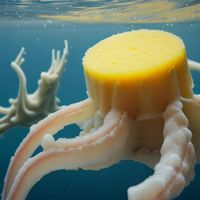
Microplastic contamination is pervasive, reaching the highest points of Mount Everest and the depths of the ocean's trenches. These minuscule plastic fragments are present in bottled water, within human placentas, and even in breast milk. They pose a threat to wildlife, disrupt natural ecosystems, and have the potential to harm human health. Their removal is a significant challenge, but researchers in China have developed a promising solution: a biodegradable sponge crafted from squid shells and cotton fibers. A team from Wuhan University utilized chitin extracted from squid shells and cellulose from cotton, both of which are organic compounds recognized for their ability to mitigate pollution in wastewater, to fabricate this eco-friendly sponge. The sponge's effectiveness was tested across four distinct water sources, including irrigation, pond, lake, and sea water, with results indicating it could remove up to 99.9% of microplastics, as detailed in a study published in Science Advances. The researchers emphasized the urgent threat microplastics pose to our planet, particularly to aquatic ecosystems, stating, "Even with various measures such as plastic reduction, waste management, and environmental recycling, the pollution caused by microplastics is irreversible and continues to worsen."
Science

Astronauts Aboard Starliner Experience Further Delay in Space Flight

By Noah Bell/Dec 21, 2024

NASA has declared a postponement of the SpaceX Crew-10 mission, which will result in astronauts Butch Wilmore and Suni Williams remaining in space for an extended period. This unexpected extension adds to their already prolonged stay aboard the International Space Station (ISS). Initially, Wilmore and Williams embarked on their journey in June, commanding the maiden crewed test flight of Boeing's Starliner capsule. Their mission, anticipated to be a week-long endeavor, was unexpectedly extended into months due to technical malfunctions with their spacecraft, prompting NASA to deem it unsafe to return them to Earth using the Starliner. Consequently, the astronauts have integrated with Crew-9, a regular ISS mission that was initially scheduled to conclude no earlier than February, following a transition period with Crew-10.
Science

Dark Comets: A Common Hybrid of Asteroids and Comets in Our Solar System?

By Thomas Roberts/Dec 21, 2024

Astronomers have recently identified seven additional instances of a celestial occurrence termed "dark comets," which may provide insights into whether these enigmatic objects played a role in transporting essential elements such as water to Earth during its early formation. This discovery has doubled the previously known count of these obscure celestial entities within our solar system, which, while resembling asteroids, exhibit comet-like trajectories through space, albeit without the characteristic "tail" associated with comets. The new findings, detailed in a study published on December 9th in the Proceedings of the National Academy of Sciences, also reveal the existence of two distinct groups among these objects. The increased knowledge of dark comets has led astronomers to conclude that they are not as uncommon as initially thought. "Studying small celestial bodies, such as asteroids and comets, is crucial as they offer clues about the distribution of materials across the solar system," explained Darryl Seligman, the lead researcher and a postdoctoral fellow in physics and astronomy at Michigan State University, East Lansing, in a press release. "Dark comets represent a novel category of near-Earth objects that might harbor water, thus serving as a potential conduit for delivering vital materials to Earth that were instrumental in the emergence of life. The more we uncover about these objects, the clearer our understanding of their part in our planet's genesis becomes."
Science

Oldest Saber-Toothed Predator Unearthed in Spain

By Samuel Cooper/Dec 21, 2024

Long before the era of dinosaurs and millions of years prior to the emergence of the first mammals, a group of distant relatives of mammals, known as gorgonopsians, ruled the land as the dominant carnivores. These creatures, characterized by their elongated, serrated canine teeth, had been absent from the fossil record for the earliest members of their lineage. However, a recent discovery has unveiled the oldest saber-toothed animal ever identified, bridging a significant gap in our understanding of gorgonopsian history. While the majority of known gorgonopsian remains are less than 270 million years old, this new find is estimated to be astonishingly between 280 million and 270 million years old.
Science

Stonehenge May Have United Ancient Britons Before European Populations Replaced Them

By Noah Bell/Dec 21, 2024

This year, a groundbreaking revelation has been unveiled concerning Stonehenge, one of the world's most enigmatic structures. A group of scientists presented compelling evidence in August that the Altar Stone, a prominent standing stone at the core of Stonehenge, was transported from northeastern Scotland, a distance of hundreds of miles, to its current location in southern England nearly 5,000 years ago. In September, a subsequent study led by the same team of experts dismissed the theory that the stone originated from Orkney, an archipelago off the northeastern coast of Scotland, which is known for its Neolithic sites. The quest for the true origin of the monolith is ongoing. Now, a new study, published in Archaeology International, posits that Stonehenge may have been reconstructed in England between 2620 and 2480 BC to foster unity among ancient Britons amidst the arrival of new settlers from the European continent. This research also delves into the methods Neolithic people might have employed to move the 13,227-pound (6-metric-ton) Altar Stone over a distance of 435 miles (700 kilometers) from its place of origin.
Science

Bizarre" Blob-Headed Fish and Amphibious Mouse Among 27 New Species Discovered in Peru

By Elizabeth Taylor/Dec 21, 2024

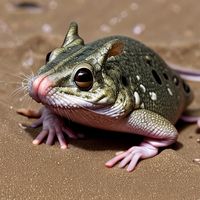
A recent expedition in the Alto Mayo region of northwestern Peru has yielded an astonishing discovery: 27 previously unknown animal species, including a peculiar "blob-headed fish" and a semi-aquatic mouse. The survey was executed by Conservation International, an environmental non-profit organization, during a 38-day journey in 2022. The team explored the Alto Mayo landscape, which encompasses approximately 1.9 million acres of forests and agricultural lands, and is characterized by a rich tapestry of ecosystems. Despite the area's high population density, there has been limited understanding of its biodiversity and ecosystem health, prompting the researchers to conduct this survey to fill the knowledge gaps. To their surprise, they identified an impressive array of new species: four mammals, eight fish, three amphibians, and ten butterfly species. A species is considered new to science when it has not undergone the formal scientific process of receiving a scientific name.
Science

Lunar Time Scale: Urgent Need to Determine Moon Time, Say Scientists

By Ryan Martin/Oct 15, 2024

In the grand tapestry of our universe, time is a slippery concept. It flows at different speeds depending on gravity's pull, a quirk that has scientists and space agencies like NASA grappling with a new challenge: how to keep time on the moon. As the world watches a new space race unfold, the question of lunar timekeeping has risen to the forefront, with implications for future settlements and exploration.
Science

SpaceX's Mission to Return Starliner Astronauts

By Eric Ward/Oct 15, 2024

A SpaceX mission has soared into the skies, embarking on a crucial task to unite astronauts aboard the International Space Station with the spacecraft that will one day carry them back to Earth. NASA's Suni Williams and Butch Wilmore have surpassed their expected stay by over 100 days, as they await the return flight scheduled for 2025.
Science

Dyson Spheres: Potential Alien Megastructures in the Milky Way? Scientists Identify 7 Locations to Investigate

By Joshua Howard/Oct 15, 2024

Imagine a shell of mirrors or solar panels encapsulating a star, harnessing every ounce of its energy—a concept as grand as science fiction itself. This was the vision of British-American physicist Freeman Dyson in 1960, who proposed what would become known as Dyson spheres. Drawing inspiration from Olaf Stapledon's "Star Maker," Dyson set the scientific community ablaze with a theory that has since become a cornerstone of speculative astronomy.
Science

Scientists Sequence DNA from 3,600-Year-Old Cheese

By Victoria Gonzalez/Oct 15, 2024

Cheese dating back 3,600 years has been discovered in the Xiaohe cemetery of China's Taklamakan Desert, providing a unique window into the past. This ancient dairy product, found scattered on the heads and necks of Bronze Age mummies, is the oldest cheese ever found and offers a tantalizing glimpse into the culinary practices of the Xiaohe people.
Science

Potential Disruption of Earth's Life by Xs and Cs in the Ionosphere

By Sophia Lewis/Oct 15, 2024

In the vast expanse of Earth's atmosphere, where communication and navigation satellites send their signals through a layer known as the ionosphere, a new mystery has emerged. This electrified realm, hovering 50 to 400 miles above our planet, is home to alphabet-shaped formations that could potentially disrupt the lifeblood of radio signals that keep our modern world connected.
Science

Astronomers Uncover the Largest Black Hole Jets Ever Detected

By Lily Simpson/Oct 15, 2024

Astronomers have made a staggering discovery of colossal black hole jets, the largest ever observed, extending a whopping 23 million light-years across the universe. The observation, which has challenged existing notions of what's possible, comes from a supermassive black hole located a staggering 7.5 billion light-years from Earth.
Science

AI Uncovers Hundreds of Unknown Ancient Symbols in Peru's Nazca Desert

By Ryan Martin/Oct 15, 2024

In a remarkable fusion of ancient mystery and modern technology, archaeologists have uncovered 303 new giant geoglyphs in Peru's Nazca Desert, thanks to the boost of artificial intelligence (AI). This discovery, detailed in a study published in PNAS, nearly doubles the known count of Nazca geoglyphs—mysterious ground artworks crafted by moving stones or gravel approximately 2,000 years ago.
Science

Rare Orcas Spotted Hunting Dolphins Off Chilean Coast

By Ryan Martin/Oct 15, 2024

In a dramatic encounter off the coast of Chile in 2023, a powerful female orca launched a much smaller dusky dolphin out of the water with a single, decisive blow. Within minutes, the battle was over, and the orca began to feast. But she was not alone in her meal; other orcas soon joined to share in the bounty. This rare event was captured on video by researchers aboard a nearby vessel, who identified the prey as a dusky dolphin (Lagenorhynchus obscurus), a species native to South America's coastal waters.
Science

Sea Robins: Fish That 'Taste' the Seafloor with Their Legs

By Jessica Lee/Oct 15, 2024

Sea robins, a unique species of fish that inhabit the ocean floor, have been found to use their taste bud-covered legs to sense and unearth prey, according to groundbreaking research. These extraordinary creatures are so proficient at detecting and digging up food as they traverse the seafloor on their six leg-like appendages that they've become a point of interest for other fish species, which often follow them in hopes of scavenging some of the newly exposed prey.